Going Green While Saving Green: The Environmental Case for Motor Upgrades
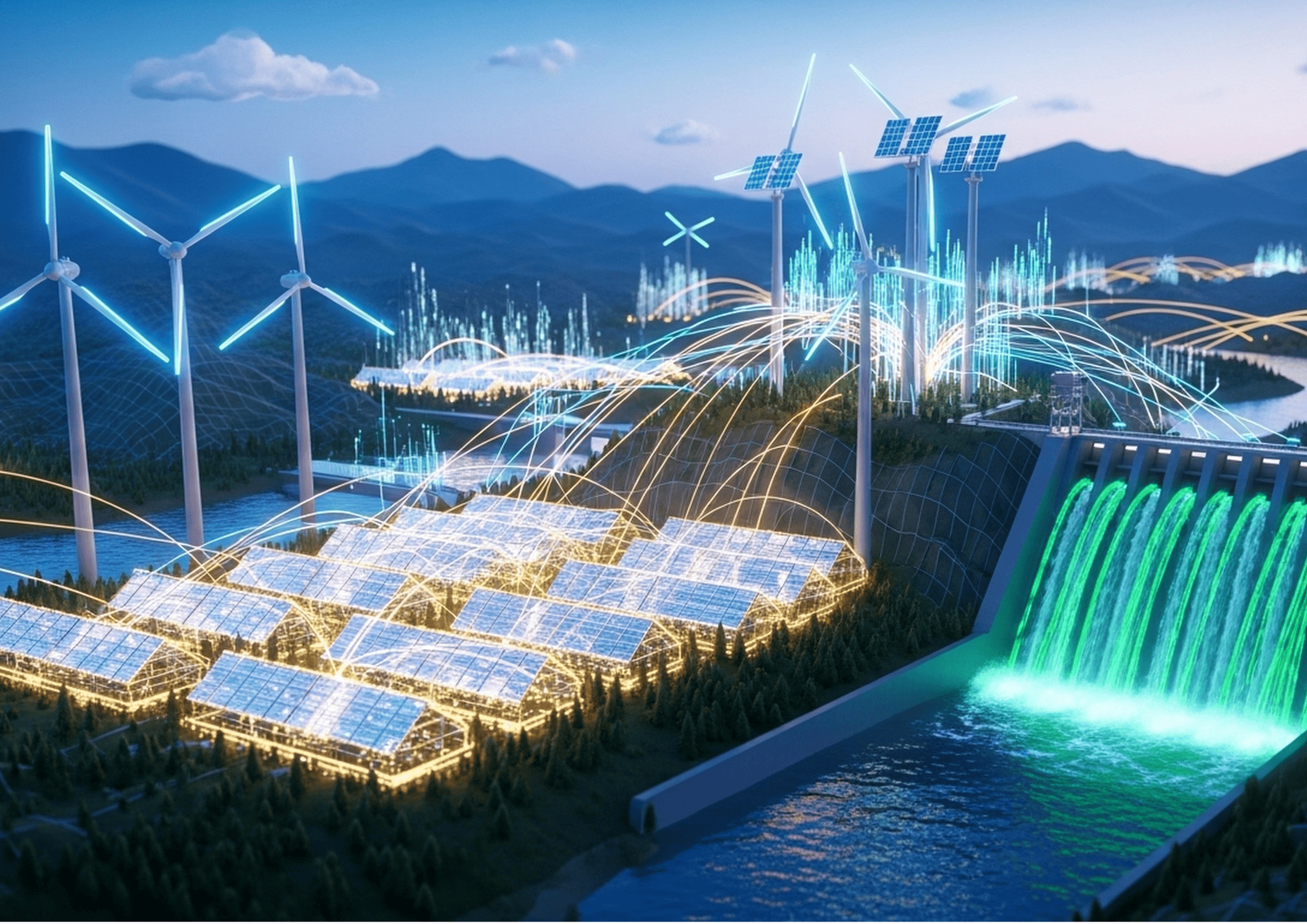
Sustainability and profitability aren’t opposing forces—they’re complementary goals that drive modern business success. Energy-efficient motors prove this perfectly: they simultaneously reduce environmental impact and improve financial performance, making corporate responsibility both achievable and profitable.
The Environmental Reality of Manufacturing
Industrial operations account for approximately 37% of global electricity consumption, with electric motors representing the single largest category of industrial energy use. This means motor efficiency directly impacts both operational costs and environmental footprint at a scale few other technologies can match.
Every kilowatt-hour of electricity consumed represents more than just a line item on an energy bill—it represents fossil fuels burned, emissions released, and environmental impact created. The electricity that powers one inefficient motor might seem insignificant, but multiply that across hundreds of motors running thousands of hours per year, and the environmental impact becomes substantial.
Carbon Footprint: From Abstract to Concrete
Understanding the environmental impact of motor efficiency requires translating kilowatt-hours into tangible carbon emissions. The relationship is straightforward: less electricity consumed means less fuel burned at power plants, which means fewer greenhouse gas emissions.
The Calculation
The carbon intensity of electricity varies by region and power source mix, but averages around 0.4-0.5 kg CO₂ per kWh in most developed countries. This means every 1,000 kWh saved prevents approximately 400-500 kg of carbon dioxide emissions—roughly equivalent to driving a car 1,000 miles.
🌍 Environmental Impact of a Typical Motor Upgrade
Example: Replacing a 50 HP motor running 6,000 hours/year with 85% efficiency with a 93% efficient model:
For a facility with 50 motors, the cumulative impact becomes substantial: preventing over 600 metric tons of CO₂ emissions annually—equivalent to removing 130 cars from the road or planting 7,000 trees. These aren’t abstract numbers; they represent real, measurable environmental benefit.
Beyond Carbon: Additional Environmental Benefits
Reduced Resource Consumption
Lower electricity demand means less coal mined, less natural gas extracted, and less water consumed for power plant cooling. High-efficiency motors contribute to conservation across the entire energy supply chain, not just at the point of consumption.
Extended Equipment Life
Efficient motors run cooler and experience less thermal stress, typically lasting 30-50% longer than standard motors. This means fewer motors manufactured, fewer raw materials consumed, and less industrial waste generated over time. The most sustainable motor is the one that doesn’t need to be replaced.
Reduced Cooling Requirements
Efficient motors generate less waste heat, reducing facility cooling loads. This creates a multiplier effect: you save energy on the motor itself, and you save additional energy that would otherwise be needed to remove the motor’s waste heat. In climate-controlled environments, this secondary saving can be substantial.
Meeting ESG Requirements
Environmental, Social, and Governance (ESG) considerations have moved from optional nice-to-haves to essential business requirements. Investors, customers, and regulators increasingly demand demonstrated commitment to sustainability. Motor efficiency upgrades address multiple ESG dimensions:
ESG Impact of Motor Efficiency Programs
Environmental
- ✓ Reduced carbon emissions
- ✓ Lower energy consumption
- ✓ Resource conservation
- ✓ Waste reduction
- ✓ Improved efficiency metrics
Social
- ✓ Healthier work environment
- ✓ Reduced noise pollution
- ✓ Improved safety
- ✓ Skills development
- ✓ Community leadership
Governance
- ✓ Regulatory compliance
- ✓ Risk management
- ✓ Transparent reporting
- ✓ Long-term planning
- ✓ Stakeholder value
Regulatory Landscape and Compliance
Governments worldwide are implementing increasingly stringent energy efficiency standards for motors and driven equipment. The European Union’s IE3 and IE4 efficiency classes, similar standards in North America and Asia, and various carbon pricing schemes make efficiency not just good practice but legal requirement.
Staying Ahead of Regulations
Proactive upgrades to high-efficiency motors ensure compliance with current and anticipated future regulations. This “future-proofing” protects against:
- Forced Upgrades: Avoid being compelled to upgrade under less favorable circumstances
- Carbon Taxes: Many jurisdictions are implementing or considering carbon pricing mechanisms
- Reporting Requirements: Increasingly detailed energy reporting may mandate efficiency improvements
- Market Access: Some customers require suppliers to meet specific sustainability standards
- Insurance Costs: Environmental risk is becoming a factor in insurance underwriting
Brand Value and Market Differentiation
Sustainability credentials increasingly influence purchasing decisions, partnership opportunities, and brand perception. Companies with strong environmental performance enjoy several competitive advantages:
Customer Preference
B2B customers often have their own sustainability goals and prefer suppliers who help them achieve those targets. Being able to demonstrate lower carbon intensity in your production processes can be a differentiator in competitive bidding situations.
Investor Attractiveness
ESG-focused investment funds control trillions in assets and actively seek companies with strong sustainability performance. Good environmental metrics can improve access to capital and potentially lower cost of capital.
Talent Acquisition
Particularly among younger workers, employer sustainability practices influence employment decisions. Companies with strong environmental commitments find it easier to attract and retain quality employees.
Brand Reputation
Public perception of corporate environmental responsibility affects brand value. In an era of social media and instant information, environmental leadership or failures can significantly impact reputation.
The Economic-Environmental Win-Win
Perhaps the most compelling aspect of motor efficiency is that it eliminates the traditional tradeoff between environmental responsibility and economic performance. Every dollar saved on energy is a dollar that didn’t create emissions. Every efficiency improvement benefits both the bottom line and the planet.
💰 Dual Benefits Example
A facility investing $500,000 in motor efficiency upgrades achieves:
Economic Benefit: $175,000 annual energy savings (2.9 year payback)
Environmental Benefit: 700 metric tons CO₂ prevented annually
Over 20 years: $3.5 million saved AND 14,000 metric tons CO₂ prevented—equivalent to removing 3,000 cars from roads for a year.
Implementation: Making Sustainability Tangible
Translating environmental commitment into action requires systematic approach:
Baseline Assessment
Document current energy consumption and calculate carbon footprint. You can’t improve what you don’t measure. This baseline also provides data for ESG reporting and regulatory compliance.
Prioritization
Focus first on motors with the highest energy consumption and longest operating hours. These deliver the greatest environmental and economic returns per dollar invested.
Implementation
Execute upgrades systematically, documenting energy savings and emission reductions. This data supports ESG reporting and demonstrates commitment to stakeholders.
Communication
Share results internally and externally. Environmental achievements should be celebrated and communicated to employees, customers, investors, and communities.
Conclusion: Sustainability as Strategy
Motor efficiency represents one of the rare business opportunities where environmental responsibility and financial performance are perfectly aligned. Companies can significantly reduce their carbon footprint while simultaneously improving profitability—no tradeoffs required.
In an era where sustainability is transitioning from voluntary initiative to business imperative, motor efficiency upgrades offer a proven, measurable way to demonstrate environmental commitment while delivering tangible financial returns. It’s not about choosing between green and profitable—it’s about recognizing they’re the same choice.
The path to sustainability doesn’t require sacrifice; it requires smart investments in technologies that benefit both the planet and the balance sheet. High-efficiency motors are precisely such an investment—good for the environment, good for business, and essential for long-term success in an increasingly sustainability-focused world.
Start Your Sustainability Journey
Let us help you calculate your facility’s environmental impact and develop a roadmap for reducing emissions while improving profitability.
Get Your Environmental Assessment